Mostrando entradas con la etiqueta Bolivia Chile. Mostrar todas las entradas

miércoles, 10 de abril de 2019

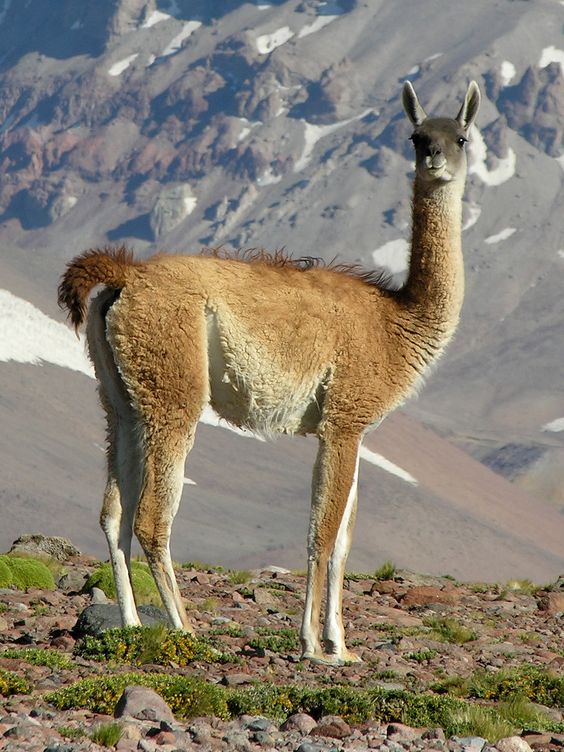
Vicuña i dess livsmiljö, Andes, hög platå och toppmöten. Fantastiska landskap


Vicuña i dess livsmiljö, Andes, hög platå och toppmöten. Fantastiska landskap


Vicuna (Vicugna vicugna) är en artiodactyl däggdjur av kamel familjen, en grupp av sydamerikanska kameldjur som lever i Andernas högland, som omfattar Peru, Ecuador, norra Argentina, västra Bolivia, nordöstra Chile . Denna art är fördelad från 3200 moh, i puna och uppåt i kallt och torrt klimat.

Vicuñas är herbivores, de matar på Andean Steppes och Puna växter. Det är beundransvärt anpassning till denna fientliga miljö och fattiga som en följd av utvecklingen av nuvarande kropps egenskaper och faktorer som bidrar till att du bor, liksom kuddarna på sina tassar, som skyddar stenarna och inte eroderar jord platån. På sätt att mata, kallas de för "låga effektgravar", eftersom gräsmarkerna där de matar sig snabbt återhämtar sig. Vicunas är "tvingas drinkers" måste dricka varje dag, så lever nära floder, sjöar, stäpper och gräsmarker som har lite grönare patchar och så kallade rika Vegas eller "våtmarker" och våtmarker och områden utan vegetation (peeling och salt). De vanligaste växterna är tola, yareta, ichu och andra gräs.

Vicuñas letar efter mat där det uppenbarligen inte finns något, men de är anpassade att överleva med lite.


Vicuñas kan vandra genom torra land, och letar efter mat där det verkar omöjligt att det fanns något. En vicuña ses genom att springa genom saltbostäderna i Uyuni, Bolivia


De befinner sig ofta nära dammar, där växtligheten blir rikligare, men inte med den mångfald och rikedom i tropikerna. Det är deras livsmiljö och deras närvaro förvandlar det torra landskapet till minnesvärda visioner.


Vicunas, ensamma eller i små familje flockar, alltid har den viktiga skede som bakgrund, bergen i höglandet, till synes livsfientliga, även om deras närvaro där redan är ett mirakel i livet. Naturen är klok och erbjuder vackra skapelser.


Nu ska vi se, vikunja på toppen av världen i den snöiga i Peru, Ecuador, Argentina, Bolivia, Chile. Det verkar som om denna passage skapades endast så att de kunde belysa sin skönhet. Blå himmel, vita snön och ibland ljusgröna vissa örter, kontrasteras av gyllene färger i denna vackra varelse, stolthet Peru och sydamerikanska länder där den magnifika Cordillera de los Andes åläggs


The vicuña in its habitat, the Andes, high plateau and summits. Fabulous landscapes


The vicuña in its habitat, the Andes, high plateau and summits. Fabulous landscapes


The vicuna (Vicugna vicugna) is an artiodactyl mammal of the family of the camelids, a group of South American camelids that lives in the Andean highlands, which includes Peru, Ecuador, northern Argentina, western Bolivia, northeastern Chile . This species is distributed from 3200 masl, in the puna and uplands of cold and dry climate.

The vicuñas are herbivores, they feed on the plants of the Andean steppes and the puna; Its adaptation to this hostile and poor environment is admirable, as a consequence of the evolution of its physical characteristics and factors that help it to live, such as the pads on its legs, which protect from stones and do not erode the soil of the altiplano. By the way of feeding, they are called "low impact grazers", since the grasslands where they feed recover quickly. Vicuñas are "forced drinkers", they must drink every day, so they live near rivers, lagoons, steppes and grasslands that have small, greener and richer patches called vegas or "bofedales", and wet areas and areas without vegetation (peeling and salt). The most common plant species are tola, yareta, ichu and other grasses.

The vicuñas look for food where apparently there is nothing, but they are adapted to survive with little.


The vicuñas can wander through arid lands, also looking for food where it seems impossible that there was something. A vicuna is seen running through the salt flats of Uyuni, Bolivia


They are often found near lagoons, where vegetation is more abundant, but not with the variety or richness of the tropics. It is their habitat and their presence transforms the arid landscape into memorable visions.


The vicuñas, alone or in small family flocks, will always have as background of the vital scenario, the mountains of the puna, apparently hostile to life, although their presence there is already a miracle of life. Nature is wise and offers beautiful creations.


Now, let's see, the vicuñas at the top of the world, in the snow-capped mountains of Peru, Ecuador, Argentina, Bolivia, Chile. It seems that this passage was created only so that they could highlight their beauty. The blue of the sky, the white of the snowy and occasionally the pale green of some herbs, contrasts harmoniously with the golden colors of this beautiful creature, pride of Peru and the South American countries where the magnificent Andes Mountains are imposed


Links with related topics:

The baby vicuña, lovely creature of the Andes


The vicuna, gold of the Andes

La vicuña en su hábitat, los Andes, altiplanicie y las cumbres. Paisajes fabulosos.


La vicuña en su hábitat, los Andes, altiplanicie y las cumbres. Paisajes fabulosos.


La vicuña (Vicugna vicugna) es un mamífero artiodáctilo de la familia de los camélidos, grupo de los camélidos sudamericanos que vive en el altiplano andino, que incluye al Perú, Ecuador, el norte de Argentina, el oeste de Bolivia, el noreste de Chile. Esta especie está distribuida a partir de 3200 m.s.n.m., en la puna y las altiplanicies de clima frío y seco.

Las vicuñas son herbívoras, se alimentan de las plantas de las estepas andinas y de la puna; es admirable su adaptación a este entorno hostil y pobre, como consecuencia de la evolución de presenta características corporales y factores que le ayudan a vivir, como las almohadillas en sus patas, que protegen de las piedras y no erosionan el suelo del altiplano. Por la forma de alimentación, se les llama “pastoreadores de bajo impacto”, ya que los pastizales donde se alimentan se recuperan rápidamente. Las vicuñas son “bebedoras obligadas”, deben beber todos los días, por lo que viven cerca de los ríos, lagunas, estepas y pastizales que poseen pequeños parches más verdes y ricos llamados vegas o “bofedales”, y las zonas húmedas y zonas sin vegetación (peladares y salares). Las especies vegetales más comunes son la tola, la yareta, el ichu y otros pastos.

Las vicuñas buscan comida donde aparentemente no hay nada, pero están adaptadas para sobrevivir con poco. 


Las vicuñas pueden deambular por terrenos áridos, buscando también alimento donde nos parece imposible que hubiera algo. Se aprecia una vicuña corriendo por los salares de Uyuni, Bolivia


Se encuentran a menudo cerca de lagunas, donde la vegetación es más abundante, aunque no con la variedad o riqueza de las zonas tropicales. Es su hábitat y su presencia trasforma el paisaje árido en visiones memorables.


Las vicuñas, solas o en pequeños rebaños familiares, siempre tendrán como fondo del escenario vital, las montañas de la puna, aparentemente hostiles para la vida, aunque su presencia allí ya es un milagro de la vida.  La naturaleza es sabia y ofrece hermosas creaciones.


Ahora, veamos, las vicuñas en la cima del mundo, en los nevados del Perú, Ecuador, Argentina, Bolivia, Chile. Parece que este pasaje fue creado sólo para que ellas pudieran resaltar estar su belleza. El azul del cielo, el blanco de los nevados y ocasionalmente el verde pálido de algunas hierbas, contrasta armoniosamente con los colores dorados de esta hermosa criatura, orgullo del Perú y los países sudamericanos donde se impone la magnífica Cordillera de los Andes